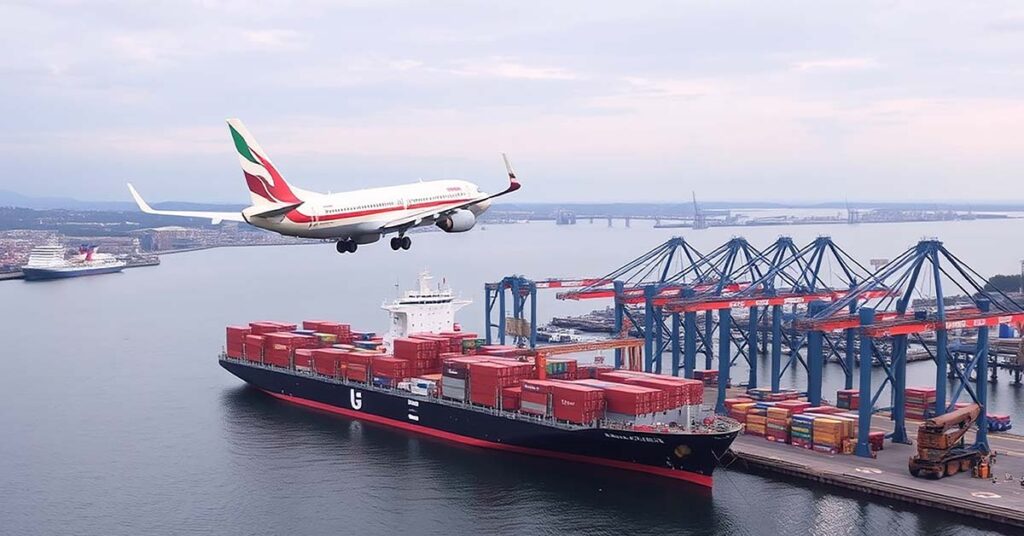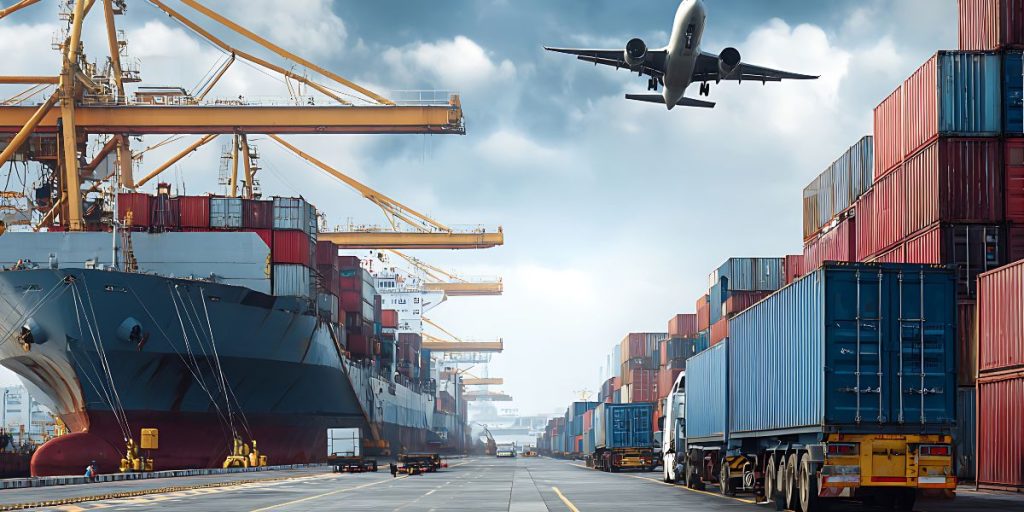
China is one of the UAE’s biggest trading partners. Electronics, machinery, building materials, furniture, textiles and everyday consumer goods travel between the two countries in large volumes. Whether you are a trader, retailer or manufacturer, choosing the right way of shipping from China to Dubai can make a big difference to your costs and delivery times.
Should you choose sea, air, express courier or a door-to-door (DDP) service? What affects the cost? And how does customs clearance work once your goods reach Jebel Ali? This guide answers these questions in clear, simple terms so you can plan your next shipment.
How long does shipping from China to Dubai take?
Shipping from China to Dubai takes around 15–30 days by sea, port to port, depending on the loading port and the vessel schedule. Air freight takes around 3–5 days airport to airport, and express courier around 3–7 days door to door. Door-to-door shipments take longer than port-to-port because of customs clearance and delivery.
| Factor | Sea Freight | Air Freight | Express Courier |
|---|---|---|---|
| Typical transit time | Around 15–30 days port to port | Around 3–5 days airport to airport | Around 3–7 days door to door |
| Relative cost | Lowest per kg, best for large volumes | Higher per kg, best for urgent loads | Highest per kg, best for small parcels |
| Best for | Heavy, bulky and non-urgent goods | High-value, urgent, perishable or light goods | Samples, documents and small orders |
| Shipment options | FCL (full container) or LCL (shared container) | General cargo, consolidated, express | Door to door, often with duty paid |
| Charging basis | Per container (FCL) or per cubic metre (LCL) | Chargeable weight (actual or volumetric, whichever is higher) | Chargeable weight per parcel |
Door-to-door times are longer than port-to-port times, as they include collection, export clearance in China, customs clearance in Dubai and final delivery.
How long does it take to ship something from China to Dubai by sea?
Shipping from China to Dubai takes around 15–30 days by sea, port to port. Sea freight to Jebel Ali usually takes 15–20 days from South China ports such as Shenzhen, Guangzhou and Xiamen, 18–24 days from Shanghai and Ningbo, and 20–30 days from northern ports such as Qingdao and Tianjin. LCL shipments can take a few extra days for consolidation at origin and unpacking at destination.
| Chinese port | Approximate transit time to Jebel Ali |
|---|---|
| Shenzhen (Yantian / Shekou) | 15–20 days |
| Guangzhou (Nansha) | 16–21 days |
| Xiamen | 15–20 days |
| Shanghai | 18–24 days |
| Ningbo | 18–24 days |
| Qingdao | 20–26 days |
| Tianjin | 22–30 days |
These are typical port-to-port times. Actual times vary with the shipping line, direct or transhipment routing, weather and port congestion. For more detail, see how long sea freight takes.
Main Shipping Routes from China to Dubai
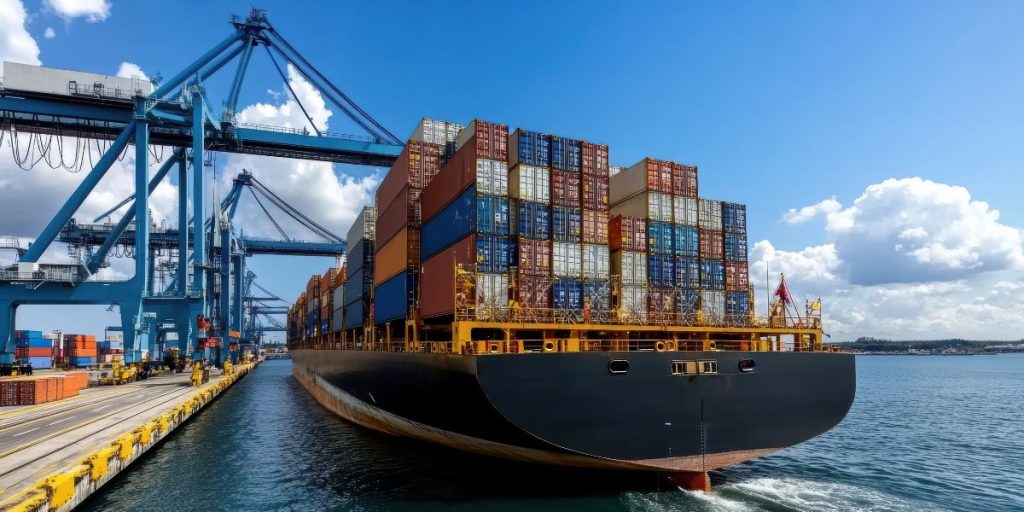
- Sea freight route – Most sea cargo from China arrives at Jebel Ali Port, operated by DP World and one of the largest and busiest ports in the region. Common loading ports include Shanghai, Ningbo, Shenzhen (Yantian and Shekou), Guangzhou (Nansha), Qingdao, Xiamen and Tianjin.
- Air freight route – Air cargo usually lands at Dubai International Airport (DXB) or Al Maktoum International Airport (DWC). There are regular cargo flights from Shanghai, Guangzhou, Shenzhen, Beijing, Hong Kong and other major hubs.
- Choosing your origin – The best port or airport usually depends on where your supplier is based. Shipping from the nearest hub keeps inland transport costs in China down.
Sea Freight from China to Dubai
Sea freight usually costs the least per kilogram for large and heavy shipments from China to Dubai. Businesses can choose between two main options: Full Container Load (FCL) and Less than Container Load (LCL). FCL lets you book an entire 20ft or 40ft container for your goods, which suits larger shipments. LCL lets you share container space with other shippers and pay only for the space your cargo uses. LCL shipments can take slightly longer because of consolidation and unpacking, but they are a practical choice for smaller consignments.
Sea freight is particularly suitable for heavy machinery, furniture, construction materials and bulk inventory. If your shipment is not time-sensitive, it keeps freight costs down. Containers are discharged at Jebel Ali, where DP World handles the terminal operations and port charges and delivery orders are managed through the Dubai Trade portal.
Air Freight from China to Dubai
Air freight is the right choice for businesses that need to move goods quickly from China to Dubai. Compared with sea freight, air shipping offers much shorter transit times, making it suitable for urgent orders, product samples, spare parts, electronics, fashion items and time-sensitive inventory. However, air freight costs more, so weigh your budget against your delivery deadline before choosing it.
Air freight charges are usually based on the higher of the actual weight or the volumetric weight of the shipment. Volumetric weight is commonly calculated by multiplying the cargo’s length, width and height in centimetres and dividing the result by 6,000, although the divisor may vary by carrier and service. Compact packaging helps reduce unnecessary costs. An experienced freight forwarder like Amexpro Global Shipping can help with consolidation, bookings and shipping documents.
Express Courier from China to Dubai
Express courier services carry small parcels, samples and documents door to door, usually in around 3–7 days. The courier collects from your supplier in China, flies the parcel to Dubai, handles customs clearance and delivers to your address. Express is the simplest option for small, urgent shipments, but it becomes expensive for heavier or bulky cargo, where air or sea freight is better value.
Door-to-Door (DDP) Shipping from China to Dubai
With DDP (Delivered Duty Paid), the seller or forwarder takes care of the whole journey: collection in China, export clearance, international freight, Dubai customs clearance, payment of duty and VAT, and final delivery. You receive the goods at your door without arranging each step yourself. DDP is available by sea or air, and door-to-door times are typically several days longer than port-to-port times.
DDP is convenient for buyers who want one point of contact, but check exactly what is included in the service and who acts as the importer of record in the UAE.
How to ship items from China to the UAE?
To ship items from China to the UAE, choose a shipping method (sea, air, express or DDP), agree Incoterms with your supplier and book with a freight forwarder. Your supplier prepares the commercial invoice and packing list, the forwarder handles export and transport, and a licensed broker clears the goods through Dubai Customs before delivery.
- Check your goods – Confirm the HS code and whether the goods need any permits or approvals in the UAE.
- Choose a shipping method – Pick sea (FCL or LCL), air, express courier or DDP based on size, weight, urgency and budget.
- Agree Incoterms with your supplier – EXW, FOB, CIF or DDP decide who pays for and manages each part of the journey.
- Book with your freight forwarder – Share the cargo details, pickup address and ready date so space can be booked.
- Collection and export clearance in China – The goods are picked up, cleared for export and loaded at the port or airport.
- Transit to Dubai – The cargo travels to Jebel Ali by sea or to DXB or DWC by air.
- Customs clearance in Dubai – Your broker files the declaration in Mirsal 2, and duty and VAT are paid.
- Release and delivery – After release, the delivery order is issued and the goods are delivered to your warehouse or site.
How much does it cost to ship from China to the UAE?
The cost depends on the shipping mode, the weight and volume of your cargo, and whether you book a full container (FCL) or shared space (LCL). The loading port, season, fuel surcharges, Incoterms, insurance, destination handling, duty and VAT also affect the final amount. Ask your forwarder for a quote based on your shipment details.
The type of container also matters, whether a 20ft, 40ft, high-cube, refrigerated or open-top container. Sea freight generally costs less for large shipments, while air freight and express courier are faster but cost more per kilogram.
Seasonal demand, fuel surcharges and the departure port or airport can also change shipping costs. Rates often rise during peak periods, particularly before Chinese New Year, so booking early helps. Incoterms such as EXW, FOB, CIF and DDP decide how costs and responsibilities are divided between buyer and seller. On top of freight, allow for terminal handling, documentation, customs duty, VAT, cargo insurance and destination delivery.
What is the customs duty rate for imports from China to Dubai?
Most goods imported from China into Dubai pay 5% customs duty on the CIF value (cost, insurance and freight) under the GCC Common Customs Tariff. VAT of 5% is then charged on the CIF value plus duty (and any excise tax, for goods such as tobacco or sugary drinks). Some goods are exempt or carry higher rates, such as tobacco and alcohol, so always confirm your HS code.
- Customs duty = 5% × CIF value
- VAT = 5% × (CIF value + customs duty + any excise tax)
VAT-registered businesses can account for import VAT through their VAT return (reverse charge) instead of paying it at the border, provided their Dubai Customs code is linked to their TRN and the broker declares that TRN. Check the treatment with your tax adviser.
How does customs clearance work in Dubai for goods from China?
Your customs broker submits the import declaration through Dubai Customs’ Mirsal 2 system, using the commercial invoice, packing list, bill of lading or air waybill and certificate of origin. Duty and VAT are paid online, the cargo may be inspected, and then it is released.
- Importer registration – Commercial imports need a trade licence and an importer code registered with Dubai Customs.
- Prepare documents – Gather the commercial invoice, packing list, bill of lading or air waybill, and certificate of origin. Some goods also need permits from other government bodies.
- Submit the customs declaration – Your customs broker files the declaration in Mirsal 2, Dubai Customs’ electronic declaration system. The details must match your documents exactly to avoid delays.
- Pay duties and fees – Duty and VAT are paid online, and port charges at Jebel Ali are settled through the Dubai Trade portal.
- Inspection (if required) – Customs may inspect the goods based on risk checks. Correct paperwork lowers the chance of a lengthy inspection.
- Release and delivery – Once cleared, the cargo is released from Jebel Ali or the airport and delivered to your warehouse or site.
Clearance is quickest when documents are complete and correct. Inspections, missing permits or mismatched details can add several days. Read our Dubai customs clearance procedure guide for more detail, or let our customs clearance team handle it for you.
What documents do you need to import from China to Dubai?
You need a commercial invoice, a packing list, a bill of lading (sea) or air waybill (air), and a certificate of origin. The importer also needs a trade licence and an importer code registered with Dubai Customs. Controlled goods, such as food, cosmetics, medical devices, telecom equipment and chemicals, also need permits from the relevant authority. See our guide to Dubai customs clearance documents for more detail.
- Commercial invoice – Shows the value, description and quantity of the goods. For mainland imports, invoices of AED 10,000 or more must be attested online by the UAE Ministry of Foreign Affairs (eDAS), within 14 days of the customs declaration.
- Packing list – Details how the goods are packed, including weights and box counts. It helps customs check the shipment quickly.
- Bill of lading or air waybill – The transport document for sea or air cargo. It is needed to collect the goods on arrival.
- Delivery order (sea) – Issued by the shipping line or its agent once freight and local charges are paid; needed to clear and collect the container at Jebel Ali.
- Certificate of origin – Confirms where the goods were made. Dubai Customs lists it as a required document for imports from outside the GCC, and it should be issued or certified by the chamber of commerce in China.
- Trade licence and importer code – A copy of your trade licence and your Dubai Customs importer code.
- Permits for controlled goods – Food, cosmetics, medical items, telecom equipment and chemicals need approvals from the relevant authority.
Tips for Smooth Shipping from China to Dubai
- Confirm HS codes early – Check the correct HS codes with your forwarder before shipping. This avoids paying the wrong duty or facing customs holds.
- Match your documents – Make sure values, descriptions and quantities are the same on every document. Even small differences can delay clearance.
- Check approvals in advance – Find out whether your goods need special permits before they leave China. Sorting this early prevents goods getting stuck at the port.
- Book ahead of busy periods – Book early before Chinese New Year and peak season to secure space.
- Agree clear Incoterms and insure your cargo – Clear Incoterms show who pays for what, and cargo insurance protects valuable goods against loss or damage.
Frequently Asked Questions
1. Is sea or air freight cheaper from China to Dubai?
Sea freight is much cheaper for heavy and large shipments. Air freight costs more but is faster and can make sense for small, urgent or high-value goods. Compare the two in our air freight vs sea freight guide.
2. Can I import from China to Dubai without a trade licence?
No. Commercial imports need a trade licence and an importer code registered with Dubai Customs.
3. What is DDP shipping from China to Dubai?
DDP (Delivered Duty Paid) means the seller or forwarder handles everything up to your door, including Dubai customs clearance, duty and VAT.
4. Which port do shipments from China arrive at in Dubai?
Most sea cargo arrives at Jebel Ali Port, operated by DP World. Air cargo arrives at Dubai International (DXB) or Al Maktoum International (DWC).
5. How long does customs clearance take in Dubai?
It depends on your documents and goods. Complete, accurate documents help avoid delays, while inspections or missing permits can add more time.
6. What is Mirsal 2?
Mirsal 2 is Dubai Customs’ electronic system for filing import and export declarations and paying duties.
Get a Quote Today
Choosing between sea freight, air freight, express courier and DDP from China to Dubai depends on your budget, shipment size and delivery timeline. Understanding transit times, customs duty, VAT and the clearance process helps you avoid delays and unexpected costs.
Amexpro Global Shipping is a freight forwarder that helps businesses ship from China to Dubai with the right shipping method and correct customs documents. Contact us for a quote based on your shipment.
Amexpro Global Shipping LLC, Dubai
Phone: +971 4 294 8666